|
Because the official narrative rarely tells the whole story.
|
|||||||
|
MONDAY, NOVEMBER 2, 2026
|
|||||||
|
From Jones’s memo to the newspaper
16,039 DAYS
OCT 22, 1969 → SEP 20, 2013
|
|||||||
|
|||||||
|
A B-52 lost two hydrogen bombs over North Carolina in 1961, and one low voltage switch kept the first from going off
|
|||||||
|
|||||||
|
I keep thinking about the letter Jack ReVelle tried to write his parents in January 1961…
Both of the hydrogen bombs he handled that month hit the ground unexploded. Sandia’s own 1961 report said the safety switch on the first one worked as designed.
ReVelle was a 25-year-old Air Force lieutenant out of Wright-Patterson, on the edge of Dayton, Ohio, where I was in the sixth grade that winter. After eight days in a North Carolina field, he sat down, wrote “Dear Mom and Dad,” and watched his hand start to shake.
I know that kind of letter. My brother Denny mailed them home from Vietnam in 1968: two pages on the heat, the food and the Reds, with a hole in the middle where the war should have been.
In 2019, NPR aired ReVelle telling his part to his daughter Karen. The two pages that explained how close North Carolina came stayed classified from 1969 to 2013.
|
|||||||
|
|||||||
|
|||||||
|
|||||||
|
To see what ReVelle walked into, you have to go back to a few minutes past midnight on January 24, 1961.
A B-52G out of Seymour Johnson Air Force Base, near Goldsboro, North Carolina, was losing fuel from a leak in its right wing. Major Walter Tulloch was trying to get it back to the runway.
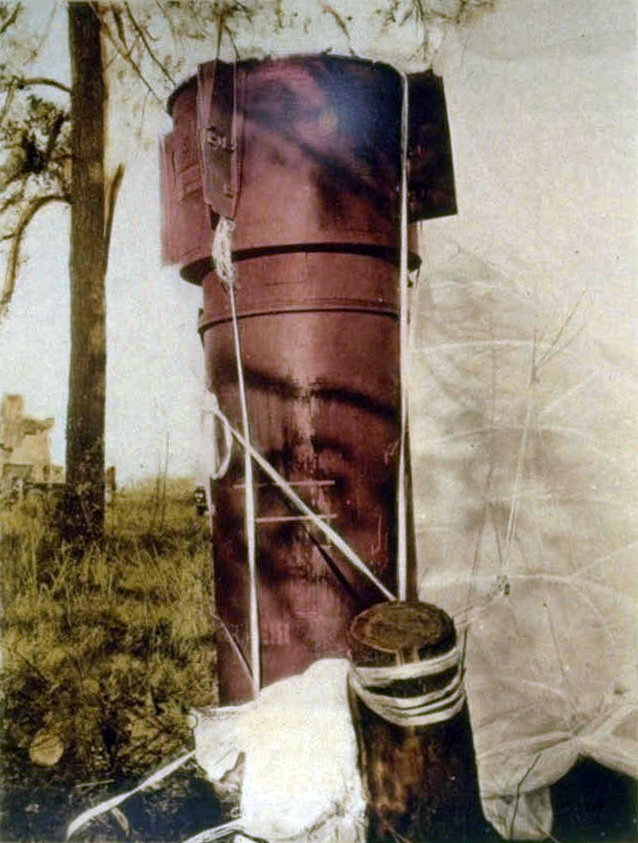
At about 12:30 a.m., the bomber broke apart over the tobacco and cotton fields at Faro, 12 miles north of Goldsboro. Two Mark 39 hydrogen bombs fell out of it, each rated at 3.8 megatons.
Weapon No. 1 rode its parachute down and stood up nose first among the trees. ReVelle said it looked like the Washington Monument.
Weapon No. 2 kept its parachute packed. By ReVelle’s account, it hit a swampy field at 700 miles an hour and buried itself.
His crew of ten dug for it in snow and rain, part of the time on their hands and knees.
Partway down, one of ReVelle’s sergeants came up with the bomb’s arm/safe switch. Speaking at East Carolina University in 2013, ReVelle gave the sergeant’s report word for word: “It’s on arm.”
You can picture the next few seconds in that hole…
Here is where the file clerk in me slows down. The paper tells it a different way.
Sandia’s post-mortem found the crash had turned the switch’s dial to ARM and torn its contacts loose, so it was never armed in the wiring. That bomb’s timer had run 12 to 15 seconds of its 42, too short to charge the firing set.
The bomb that kept Sandia up at night was the one under the parachute.
Eight years later, on October 22, 1969, a Sandia safety supervisor named Parker F. Jones sat down to answer a book. The physicist Ralph Lapp had written that a single switch kept a 24-megaton bomb from going off over North Carolina.
Jones answered him line by line, with Lapp’s paragraph in one column and his corrections in the other. Four safety devices, Jones wrote, not six, and one of those did nothing in the air.
He called it an accident, not an incident, and he called Lapp’s report short on objectivity and accuracy.
Then he agreed with Lapp’s last line. One “simple, dynamo-technology, low voltage switch stood between the United States and a major catastrophe.”
In his next breath he went further than Lapp. The Mk 39 Mod 2, he wrote, “did not possess adequate safety for the airborne alert role in the B-52.”
That January, the Strategic Air Command had just doubled its airborne alert to 12 bomber flights a day. The Goldsboro B-52 was one of them.
Goldsboro got a different story. Wire reports the morning after the crash called the bombs unarmed and said there was no immediate danger of a nuclear blast.
In public, Washington kept saying its bombs had never put Americans in danger.
That is the cost I keep landing on. The men in that hole, and the farm families around Faro, were told one thing while Sandia wrote down another.
Eric Schlosser, a reporter writing a book on nuclear accidents, pried the memo loose with a Freedom of Information Act request. The Guardian printed it on September 20, 2013.
In June 2014, the National Security Archive posted the 1961 Sandia studies, which the Department of Energy released after the Archive asked for them.
|
|||||||
Parker F. Jones, Sandia Corporation, October 22, 1969. Excerpts from pages 1 and 2 as released; the bar marks a passage stamped DELETED. Obtained under FOIA by Eric Schlosser; published by The Guardian, September 20, 2013.
|
|||||||
|
|||||||
|
|||||||
|
|||||||
|
|||||||
|
|||||||
|
Hit reply and tell me about a letter home in your family that skipped the hard part. I read them at the dining room table, next to the file boxes my wife Marilyn wants off it.
|
|||||||
|
|||||||
|
|||||||
|
I hope ReVelle finished that letter to his folks, and I have no way to know if he did.
Denny’s letters sit in the second file box on our dining room table. Every one of them opens the same way: Dear Mom and Dad.
Talk tomorrow,
Ray
|
|||||||
|
|||||||
|
“A popular Government, without popular information, or the means of acquiring it, is but a prologue to a Farce or a Tragedy; or perhaps both.”
JAMES MADISON, LETTER TO W. T. BARRY, AUGUST 4, 1822
|